Fitness Equipment Affiliate Content: Explain Space, Setup, and Ownership
Plan fitness equipment affiliate guides around room measurements, setup requirements, storage tradeoffs, ownership costs, and honest limits on outcome claims.
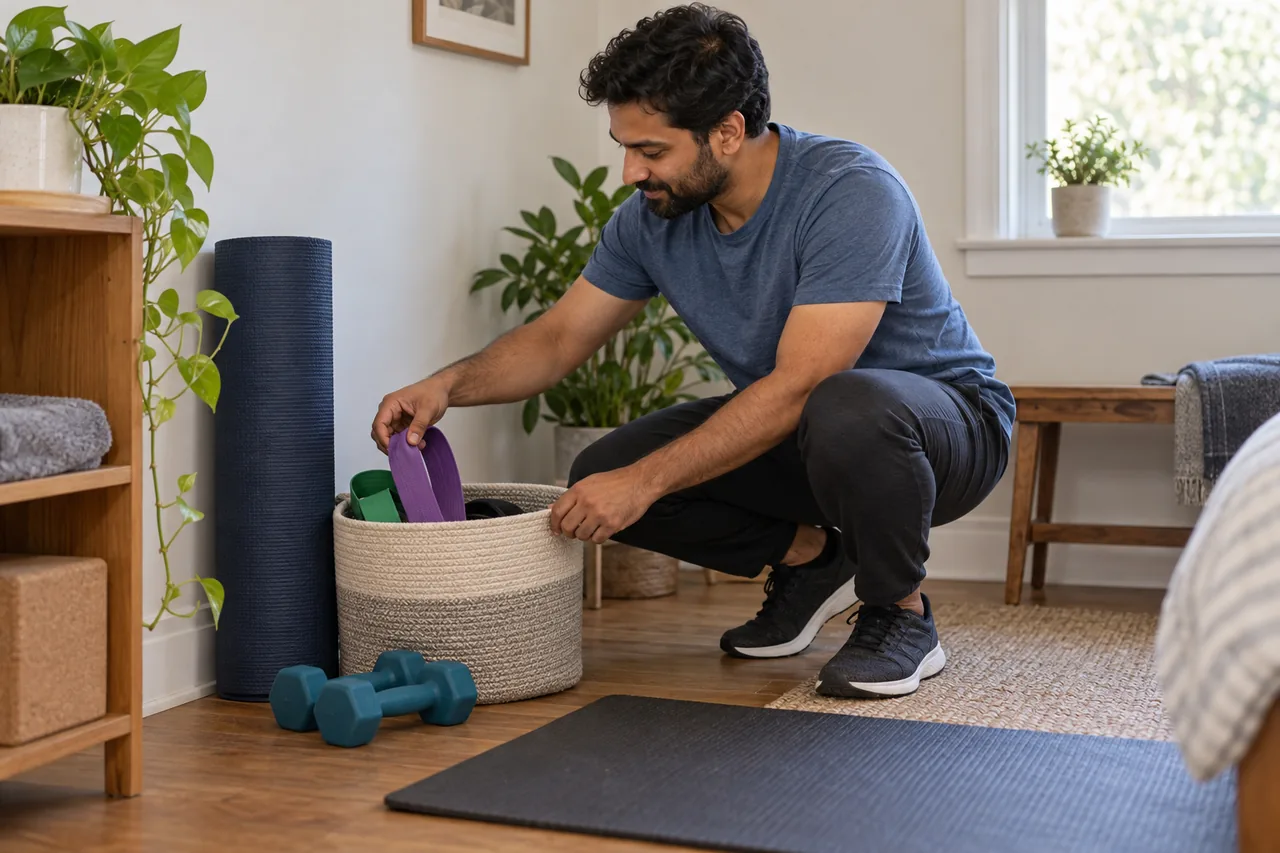
Fitness equipment content can help readers understand ownership without prescribing exercise or promising results. Space, access, setup, and storage are practical questions that often receive less attention than dramatic advertising. Focus your affiliate guide on those decisions. A suitable buying worksheet should remain valuable whether the reader purchases equipment now, later, or not at all.
Define the equipment setting
Identify the intended room, available dimensions, access route, and whether the equipment stays assembled. A shared apartment and a dedicated room create different constraints. Ask readers to record the manufacturer's clearance, installation, and use requirements for the actual model.
Avoid guessing that a floor, wall, or electrical connection is suitable. Explain which questions require the manufacturer, property owner, or an appropriately qualified professional. The guide's purpose is to organize information before purchase, not provide a blanket safety assessment for an unknown home.
Include a space sketch with the item stored and in its proposed use position. Ask readers to compare both layouts with their daily room routine before treating compact packaging as evidence of practical ownership.
Compare ownership requirements
Create separate fields for assembled dimensions, storage dimensions, delivery arrangements, included components, maintenance instructions, and support. A low purchase price may leave unanswered questions about assembly or replacement parts. Keep current prices separate from stable decision criteria and avoid presenting an old example as a live offer.
Record whether important claims come from a product manual, merchant listing, or your own documented use. Research can establish stated dimensions but not prove comfort, reliability, or physical outcomes. An honest evidence label is more useful than a fabricated rating.
Use a fictional small-room example
Imagine a fictional reader choosing an accessory for a room that also serves as an office. The equipment must be stored after each session, and the door route is narrow. Your article compares a foldable format with a permanently assembled format based on measured space and the reader's routine.
The worksheet includes time and effort for moving the item, the storage location, and the instructions the reader needs to review. Neither choice is described as producing better fitness results. The scenario illustrates household suitability and leaves individual exercise decisions outside the shopping guide.
Place links within the ownership checklist
Show shopping destinations beside documented requirements and ask readers to confirm the exact model. Disclose affiliate compensation clearly. Avoid linking to an unrelated replacement when the original item is unavailable simply to preserve a revenue opportunity.
Check the program's allowed channels and the merchant's delivery area. For large items, explain which delivery and return questions remain unresolved rather than implying hassle-free ownership. Do not turn a seller's promotional outcome into your own claim. A practical guide can be persuasive by showing the real decision, including reasons to defer a purchase.
Develop an ownership content cluster
Publish distinct pages for measuring a room, comparing storage formats, preparing questions for delivery, and maintaining an ownership record. Link them at the relevant planning step. These pages answer different needs and can stay useful through product changes.
Maintain a register of model details, manual references, and review dates. Reader questions about clearance or storage can reveal missing checklist fields. Evaluate whether the content helps people rule out unsuitable options, not only whether it produces clicks. A guide that prevents an impractical purchase has served its reader even when no commission follows.
Frequently asked questions
Should an equipment article promise weight loss or fitness results?
No. Keep the guide focused on documented ownership and suitability information, and avoid individualized exercise or health promises.
Can I compare dimensions without a hands-on test?
Yes, using clearly identified current documentation. Label the research basis and ask readers to verify the exact model and their own space.
About this guide
This guide presents an original planning framework and hypothetical examples. It does not report a product test or measured commercial result.
Program features, eligibility and terms can change. Check the official documentation before applying or promoting an offer. Examples in this guide are illustrative.
Put the next step into practice
Explore the free LinkRush campaign planner or continue learning below. Planning tools save your work in your browser.
Explore the workspace →